Tuesday, 24 January 2012

Do you judge a book by it's cover?

How many of you are drawn to a book by how it looks? Does this method of choosing a book work or are you more often than not disappointed?

I am very drawn to the look and feel of a book, hence my apathy toward e readers. I get very excited when I go into bookshops and see the rows and rows of beautiful  booky possibilities. Some ladies get excited by clothes shops- (which I do occasionally) but I get much more of a thrill from a well stocked bookshop.

Many book covers are extremely beautiful- works of art in their own right. I love this Penguin Classics series of 20 Food Titles, including Eliza Acton's The Elegant Economist and Elizabeth David's A Taste of the Sun.


I love the Vintage range of books too. Many of their designs are simple but elegant and my intention is to build a collection from these as there are so many to choose from.


Top of my list are Westwood by Stella Gibbons


On the Beach Nevil Shute


Of Human Bondage W Somerset Maugham


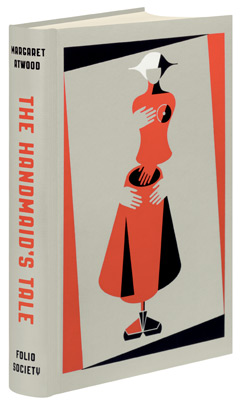
If money was no object, then I would have to have a collection of Folio Society books.
These are incredibly beautiful but also a tad expensive for my pocket at present. I would love to own these gorgeous specimens!


At the Back of the North Wind

Birdsong


The Handmaid's Tale which incidentally has the most amazing illustrations- I have added a few for you to see


If you are interested in book cover art then take a trip over to  Book Cover Archive which has an amazing collection of book cover images which can be searched through by categories such as designer, photographer, title and author.

I will leave you with a few more book designs that I particularly like. Let me know your favourite book covers. I would love to see them.


Friday, 13 January 2012

Literary Round-up

Hi all


As today is Friday 13th, I thought I would do something to distract your minds from the sense of impending doom that seems to be present on this date and have gathered together a few of my favourite book related discoveries to share with you all. If my literary round-up proves popular, I may even make it a regular feature and would be pleased to hear what you think.

On Wednesday, the excellent Guardian Book Blog  featured an interesting post about Twitter and how it is being used by authors to communicate with each other- "a virtual literary salon" as it is described in the post's title.
I have been using Twitter for quite a while but it is only recently that I have become a fan.- I love its immediacy and its brevity and I know that many users love the fact that it allows them to communicate directly with their favourite celebrity.


My new book blog discovery of the week, Life Between Pages is written by Sophie who has similar literary interests to myself. Her blog is attractive to look at and her posts insightful and interesting. I look forward to reading more and wish her well with her blogging adventures.


Something that has got me really excited, is Sharing the Passion- A Celebration of Reading and Writing which is going to be taking place in my local arts centre. I live in a small town in rural Dorset and to have an event of this nature is quite something. Needless to say, I have already booked my ticket and am counting down the days!


An exciting forthcoming TV event happening very soon is the BBC adaptation of Sebastian Faulke's Birdsong.
I have read this book several times and it is probably in my top 20 favourite books of all time. I am intrigued by the casting of Eddie Redmayne in the lead role as he isn't at all how I imagine the character to look. However, I am a fan of Eddie's from his previous roles in The Pillars of the Earth and Tess of the Durbevilles and think he is a talented actor so I am sure he will be able to pull it off.

Finally, my absolute favourite online booky highlight of the week has to be this video. I am sure many of you will have already seen this piece of genius created by the owners of Type Bookshop in Toronto.
If you haven't then you are in for a treat. I have watched it several times now and can't stop marvelling at how clever this is and how much time it must have taken to do.

I really hope you have enjoyed my literary round-up and that it has gone a little way toward making today a bit brighter.

Hope your weekend includes some quality reading time. I am sure mine will.

x

Sunday, 8 January 2012


“I have always held the old-fashioned opinion that the primary object of  a work of fiction should be to tell a story.” 
― Wilkie Collins


This year, I am making it my mission to find out more about the authors of my favourite period in literature- The 19th Century. Most people are aware that 2012 marks the 2ooth anniversary of Charles Dicken's birth and there are countless blog posts being written about the great man. In the interests of variety,  I thought I would give another of the great 19th Century writers a chance in the spotlight.


William Wilkie Collins was born on the 8th January 1824 in London. His father, William Collins was a well known landscape artist and member of the Royal Academy and at one time, Wilkie himself considered a career as an artist.


However, fortunately for the world of literature, he began to write and became prolific producing 30 novels, more than 60 short stories as well as 14 plays and 100 works of non-fiction.

Perhaps his most famous works are his novels The Woman in White and The Moonstone.


 The Woman in White, which was published in 1860 is a "sensation novel", a genre that includes other literary classics such as Great Expectations, East Lynne and Lady Audley's Secret.Sensation novels were popular with the general public in the 1860's and 1870's, but were scorned by academics of the time. Today, these works are generally viewed as the forerunners of detective novels.


In March 1851, Wilkie Collins met Charles Dickens and they formed a friendship that lasted until Dickens death in 1870. This meeting resulted in Collins working as an editor on Dickens publication 'Household Words' which featured serialized works by Collins including 'The Dead Secret' and 'A Rogue's Life.'


It seems to be a prerequisite of many of the successful  19th Century writers that their personal lives were almost more complicated than the fictitious ones they created.Wilkie Collins was no exception,  never marrying but instead enjoying two relationships at the same time.


 The first, the beautiful Mrs Caroline Graves was a widow who Collins lived with from around 1858 until his death in 1889, with a two year break in 1868 when Collins had a relationship with the second significant woman in his life, Martha Rudd. During this time, Mrs Graves remarried to a Joseph Clow, but this marriage ended in 1871 and she carried on where she had left off with Collins.


Martha Rudd was a girl of nineteen when she met the then 40 year old Collins in 1864 in Great Yarmouth. Four years later, Wilkie bought her to London and put her in a house in Bolsover Street. Rudd and Collins had 3 children together- 2 girls and a boy.

It seems that despite resuming his relationship with Caroline Graves, Collins was still committed to Martha and their children and left them well provided for in his will.


Until I began researching the Mr Collins for this blog post, I knew little of him and of the complicated romantic life that he led. However, I am intrigued to find out more about this man who was described in his obituary of 1889 written by Francis W. Halsey as 
..... a man of small stature, stooping somewhat in the shoulders, but with large eyes and a round, genial face, framed in by heavy hair and beard, that ill late years were almost white.


  I have added the biography by William M Clarke to my TBR pile as well as all of Collins works, beginning with The Moonstone.

2012 is going to be a busy reading year me thinks!

A belated Happy New Year to all my readers.I hope this year is a good one for you.

x


Wednesday, 21 December 2011

What the Dickens?


2012 is going to be an exciting year for literature fans everywhere as it marks 200 years since the birth of Charles Dickens.

For me, Dickens is one of the most imaginatively brilliant and clever writers that has ever lived. His characters are fascinating and his stories are both tragic and heart-warming.
Admittedly, his books are not easy to read and many people find the old fashioned language hard to cope with. But if you can get past that and allow yourself to be immersed in his world, the effort is truly worth it.


To mark the special occasion, there are lots of activities planned throughout 2012 -have a look at the website for more details. Sadly I'm not sure I will be able to enjoy any of them as most of them seem to be taking place in London. However, I am looking forward to the season of Dickens on TV and Radio.

The BBC has this year filmed a new version of Great Expectations. It stars Gillian Anderson as Miss Haversham and Ray Winstone as Abel Magwitch and apparently  has a new ending. I am looking forward to this greatly as no-one does Dickens like Aunty Beeb.


Top of my Christmas list this year is Claire Tomalin's Charles Dicken's- A Life. I already know that Santa is going to be bringing this to me and I can't wait to get started on it.I am really interested to find out more about the man behind the books although I have a feeling I am going to be surprised by what is revealed about him.


As part of  my own celebrations, I have decided to set myself  the challenge of reading at least 6 Dickens novels throughout 2012.
I am cheating a little as I have already made a start on the first on my list- Little Dorrit- but I am sure no-one will hold it against me.


The others on my list are

Bleak House
Our Mutual Friend
Dombey and Son
The Old Curiosity Shop
Nicholas Nickleby

If time allows, I also hope to read some of his short stories, in particular, this collection of Ghost Stories,

If you would like to join me in this challenge, feel free to add a comment to this post. I would love to hear your choices.


To me, Charles Dickens is as much a part of the Christmas tradition as mince pies, carol singing and falling asleep in front of the TV whilst watching The Queen's speech.

A Christmas Carol is one of if not the greatest Christmas story of all time and there have been many excellent versions. However, my favourite ( if not totally accurate) one and the one that is always watched in our house over the festive season is A Muppet Christmas Carol.

I will leave you with one of my favourite songs from the film and would like to wish you all A Very Merry Christmas and A Peaceful and Prosperous New Year

Take it away Kermit


xxxx

Friday, 11 November 2011

We Shall Remember Them


'Jack fell as he'd have wished,' the mother said,
And folded up the letter that she'd read.
'The Colonel writes so nicely.' Something broke
In the tired voice that quavered to a choke.
She half looked up. 'We mothers are so proud
Of our dead soldiers.' Then her face was bowed. 

Quietly the Brother Officer went out.
He'd told the poor old dear some gallant lies
That she would nourish all her days, no doubt
For while he coughed and mumbled, her weak eyes
Had shone with gentle triumph, brimmed with joy,
Because he'd been so brave, her glorious boy. 

He thought how 'Jack', cold-footed, useless swine,
Had panicked down the trench that night the mine
Went up at Wicked Corner; how he'd tried
To get sent home, and how, at last, he died,
Blown to small bits. And no one seemed to care
Except that lonely woman with white hair.


Siegfried Sassoon 

Tuesday, 18 October 2011

Faceless Killers

 I have just finished  reading Faceless Killers by Henning Mankell, the first in the Kurt Wallander series.


 I am a latecomer to the series as this book was written 20 years ago. Mankell has a huge fan base from all over the world and in fact the Wallander novels have been translated into 45 languages and have sold over 30 million copies.
There have also been several screen adaptations of Wallander, both Swedish and British (with Kenneth Branagh in the British version.)

I don't normally read crime fiction as it doesn't generally appeal to me but I was tempted by this after having recently watched the excellent The Killing on BBC 4 and The Millennium Trilogy on DVD.
Scandinavia is somewhere I would love to visit and so anything set here is immediately more appealing to me. There seems to be a huge surge in interest in the Scandinavian crime fiction genre and I am not ashamed to admit I have jumped on to the bandwagon.


From the start of Faceless Killers,  it is obvious that Wallander is going to be a complex character. He is going through a lot of turmoil in his private life- the recent breakdown of his marriage, his father's ill health and a troubled relationship with his daughter.
He also has an alcohol problem,  lives off a diet of junk food and is a workaholic. His marriage breakdown has affected him deeply and in desperation he tries unsuccessfully to begin a relationship with the attractive and more importantly, married, acting public prosecutor Anette Brolin.

The main plot of the story is the brutal murder of an elderly farmer and his wife at an isolated farmhouse in the Swedish countryside. When the couple are discovered, the man is already dead but his wife is still alive and manages to utter the word 'foreign' before she dies.

This one word leads to the conclusion that the awful deed has been committed by an immigrant and there is a public backlash against a nearby refugee centre.
Wallander and his team of colleagues not only have to solve the murder, but also have to protect the refugees from attacks of a racist nature.

Manning's writing is fast paced and engrossing. He explains the investigation process in a logical precise manner and it is easy to follow what is happening. There are poignant scenes, such as the one where Wallander's senile father thinks he is leaving home to travel to Italy to paint, dressed in a big hat and pyjamas.
Manning handles this scene beautifully, showing a softer caring side to Wallander.

I was very interested to listen to Henning Mankell talk about this book on the World Book Club broadcast in July of this year. In the interview, he says that he didn't create Kurt Wallander and then write stories around the character but rather that the story came first and that he felt he needed a policeman in his story.


The interview is well worth a listen, whether you are a Henning Mankell fan or like me, totally new to his work. He comes across as a genuinely very nice man with a superb sense of humour and total humility.
I shall certainly be reading more of his novels, both the Wallander series and his other general fiction.

I would rate this book as 8 out of 10. The storyline is a good one and keeps you guessing until the end although it does finish a little abruptly. Worth a read.


Thursday, 22 September 2011

Back to school

October is nearly here and I am really looking forward to it for a number of reasons.The main one is that it heralds the official start date for my OU course- AA100 The arts past and present


I am doing this course as the first step towards the BA in English Literature that I hope to achieve. Doing a degree is an ambition that I have had for a long time but which has been on the back-burner due to time restraints.
However, now I am not working and my daughters are teenagers, there are a few spare hours in the day in which I can study.


Having received the course materials a few weeks ago, I have made a start already so that I can get ahead.

From what I have read so far, AA100 promises to be both a challenging and enjoyable experience.The subjects covered are extremely diverse and include chapters on Cleopatra, Stalin and The Dalai Lama. 


There is also a strong focus on analysing art, which is something that I have no knowledge of and of which I am a bit apprehensive.

Part of my first assignment involves analyzing this painting by Paul Cezanne, called (uninventively) Jug and Fruit.


  I think I am going to find this quite difficult as my first impression of the painting is sheer dislike. It is not something that I would choose to hang on my wall, no matter how renowned an artist Cezanne is.

Currently I am reading the play Doctor Faustus written by Christopher Marlowe.


 Marlowe was a contemporary of Shakespeare and there is a somewhat controversial theory that some of The Great Bard's plays were written by other authors of the time, Marlowe amongst them.

Having only studied Hamlet and Macbeth at school many years ago, I thought I would struggle to read the Renaissance language. However, by using the study notes and by also listening along to the play on CD whilst reading , I haven't found it difficult at all. In fact it has been a very enjoyable experience.


Without giving too much away, the play tells the story of Doctor Faustus, an extremely intelligent but greedy man who sells his soul to Lucifer in exchange for 24 years of service from the demon, Mephistopheles.
The play, which was written around 1592 is based on the German legend Faust. It wasn't published until 1604, 11 years after Marlowe's death.

The story of Christopher Marlowe's life would make a fascinating book in its own right. He was born in the same year as William Shakespeare and studied at Corpus Christi College, Cambridge. While there, it is believed that he was recruited as a spy for the Government and disappeared for a while, later returning to obtain his MA.

In 1587, he went to London to become a playwright and wrote several plays including The Jew of Malta, Edward II and The Massacre at Paris.

What is more fascinating for me though is his life outside writing. He was frequently in trouble with the police for brawling and was charged with murder in 1589 when a man died during a street fight. Marlowe was sent to Newgate Gaol where he spent two weeks. He was later acquitted of the charge. It was apparent that Marlowe had "friends in high places" who saved him from getting into serious trouble.

 Marlowe is possibly more famous for his death than anything else. In 1593 at a house in Deptford belonging to a Mrs Eliza Bull,  Marlowe was eating supper with three other men- Ingram Frizer, Nicholas Skeres and Robert Poley. An argument broke out over who was to pay the bill and Marlowe is said to have grabbed Frizer's dagger and hit him over the head with it. A fight broke out which resulted in Marlowe being stabbed through the right eye by Frizer. He died instantly.

The coroner found that Frizer was acting in self-defence and received a royal pardon for the charges against him. However, Frizer, Skeres and Poley were all three quite shady characters and it is now believed in some quarters, that he was assassinated for his heretical beliefs or his involvement in the secret service. Very James Bond!

I find the whole story quite fascinating and  think it would make a brilliant topic for a novel and or a film. Quite surprised that it hasn't been done before.

Anyway that's today's history lesson over with- I have more study to do

Catch you all later

Tracey